

Call our head office number today to book a survey 023 9243 0183, or book online
What are Structural Repairs?
The Structural Masonry Restoration division of 1st Master Wall Ties specialises in strengthening and stabilisation a buildings superstructure; that is to say reinforcing the portion of the building that is above its foundations. Structural repair activities include:
- Reinstating the structural integrity of cracked brickwork and masonry
- Retro-fitting bed joint reinforcement systems to relieve stress concentrations and to support brickwork above openings.
- Installing lateral restraint ties at wall and floor junctions to secure the façade of a building to its internal structure.
It is important to understand that every building moves to some degree and that some buildings are less resilient to movement than others; more readily exhibiting signs of distress such as cracks in walls, sagging lintels and bowing brickwork.
Such defects are caused by a build-up of stress beyond that which can be withstood by the construction materials. Unsurprisingly cracks tend to develop where masonry is over-stressed and least restrained, typically adjacent to window and door openings or at corners.
The Structural Repairs division of 1st Master Wall Ties has been highly successful in providing robust solutions to common building movement defects. Our technical and practical skills have been acquired through many years of experience. These skills are put to use when we carry out work to strengthen and stabilise cracked walls, bulging walls, sagging lintels and overloaded brickwork. Our masonry repair systems can be used to reinforce a wide variety of structures, ranging from historic heritage buildings and Victorian housing right through to more modern properties.

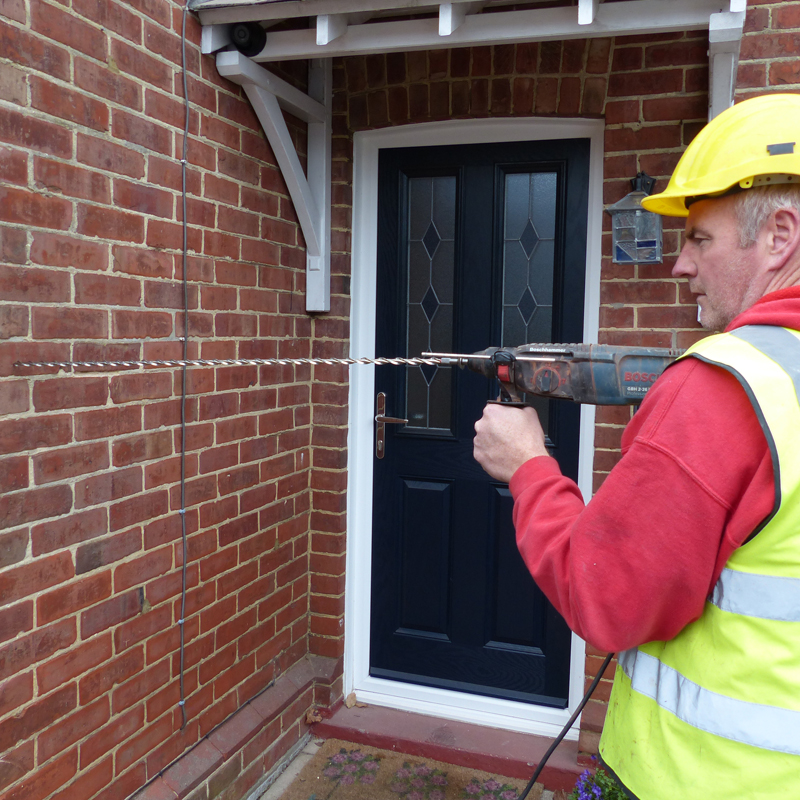

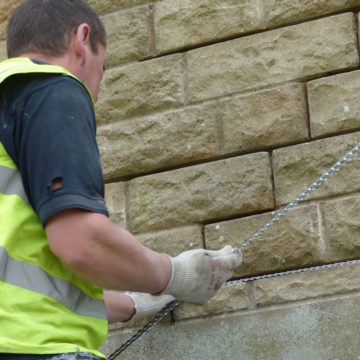
We are proud to announce that we are now an Helifix Approved Installer! This accreditation allows us to expertly install a wide range of Helifix products and offer you insurance-backed guarantees of 10 or 25 years on all types of structural repairs. With our trusted services, you can enjoy complete peace of mind for the future.
To learn more about our Helifix-approved structural repair solutions, contact us today!

Providing the best strategy for your building
We have a reputation for providing cost effective solutions to both simple and complex structural problems using modern repair techniques with tried and tested masonry reinforcement products. Our strategy is to provide robust and long-lasting reinforcement solutions with minimal disturbance to the fabric of the building or to its occupants.
Whether we are stitching cracks in walls, reinforcing brick arches lintels or securing wall junctions you can be assured that, as Contractor members of the Structural Repairs Association, our retrofit masonry repair work will be professionally implemented, highly effective and fully concealed.

Why do walls buckle or bow?
Bowing, leaning or bulging in external walls are a result of insufficient lateral restraint. Walls tend to be rather high but extremely slender structures and this slenderness ratio leaves then vulnerable to thrusting or buckling forces. In construction restraint is provided by strapping external walls to floor diaphragms and by the brick-bonded connection of the buttressing partition walls running that run at right angles. Problems often occur when the lateral restraint between the external walls and the floor joists and partitions are defective or are missing, as is often the case in older buildings.
How do Lateral Restraint Ties work?
Remedial lateral restraint ties are retrofit tie rods that reconnect the facade of a building back to its main structure to enhance resistance to thrusting and buckling forces. Some of these tying systems are designed to tie the external wall to the timber joists of the structural floor diaphragm or to stud walls.
If you would like to find out more about lateral restraints or would like to book a survey to further diagnose any issue you may be having please feel free to give us a call or email and we would be happy to help.

Others constraining systems are designed to reconnect and strengthen masonry wall junctions to transfer lateral forces back to buttressing walls.
The combination of both restraint types helps to form small box-like structures within a larger structure, thus increasing lateral restraint and stabilising the external wall.
Masonry Crack Stitching
What is crack stitching?
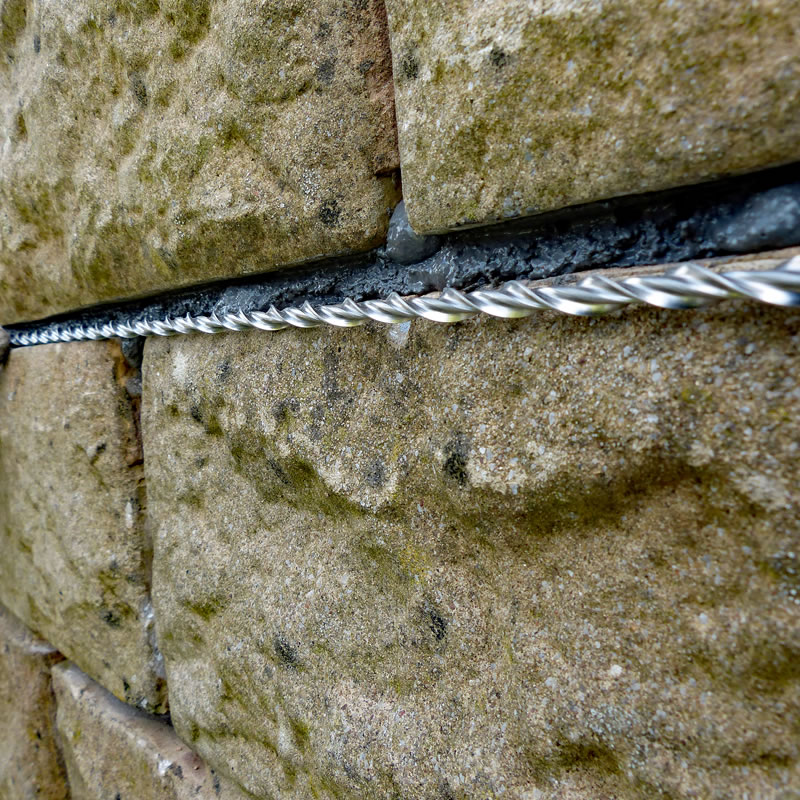
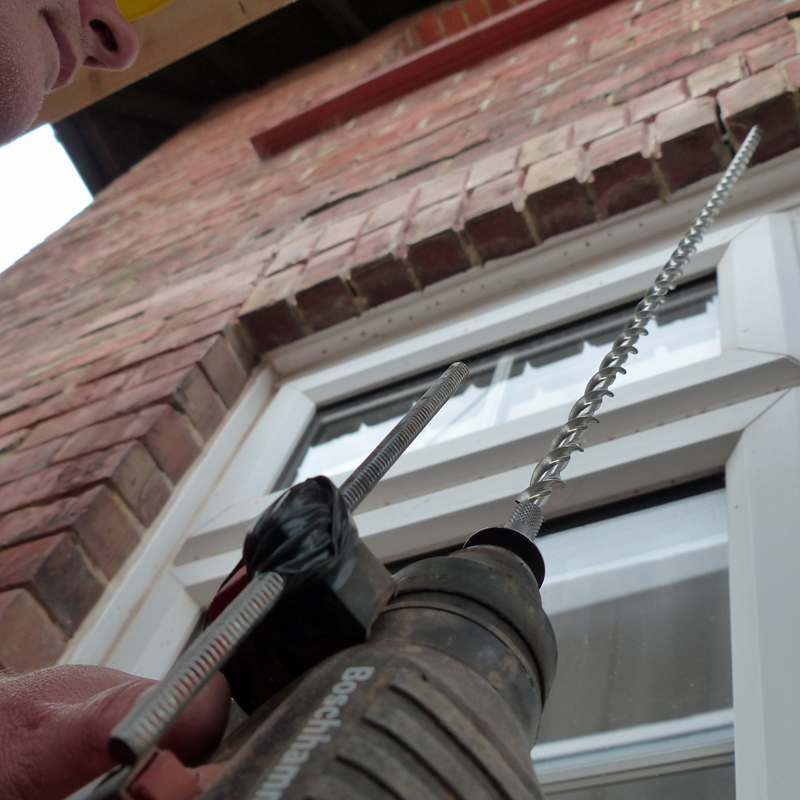
A series of helical crack stitching bars are retrofitted into cracked walls to reconnect walls on either side of a fracture. The high-tensile stainless steel reinforcement bars are bonded into slots that extend 500mm either side of the crack to permanently strengthen the masonry and stabilise the structure within the cracked zone.
How does brick stitching work?
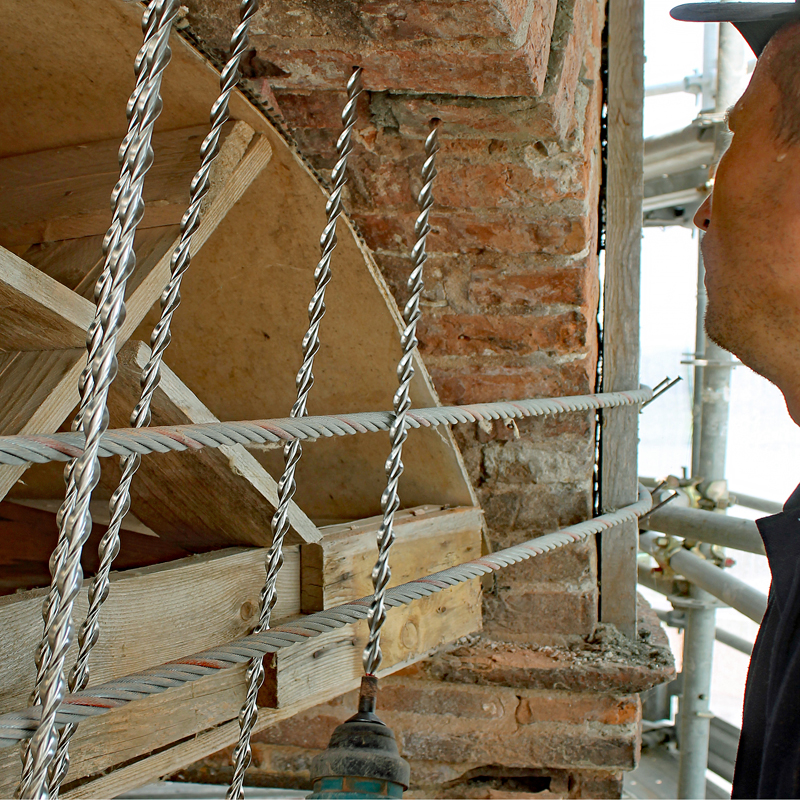
Helical reinforcement bars have a deep interlocking helix that provides an excellent bond when used with high strength polymer-modified grout to stitch brick and masonry walls. The bar and grout combination stitches across the cracks to hold the fractured wall together and to increase both the tensile and shear strength of the brickwork.
Helically twisted bars have a unique torsional yield characteristic that absorbs stress and disperses the load along a greater length of the wall. The bars accommodate normal thermal and moisture movement and provide great resilience to future cracking.

What is a brick lintel repair?
Lintel repairs utilise parallel lengths of high-tensile helical bars bonded into specified mortar bed joints above openings to form brick lintels by creating reinforced beams using the existing masonry. These brick beam lintels can also be used to span areas of localised foundation movement.
Signs of lintel failure
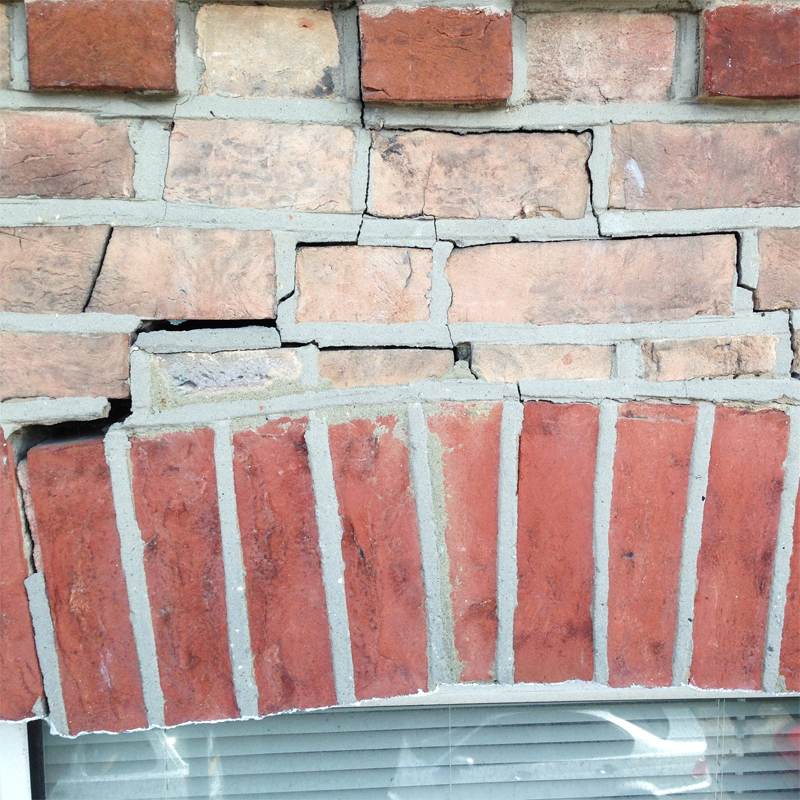
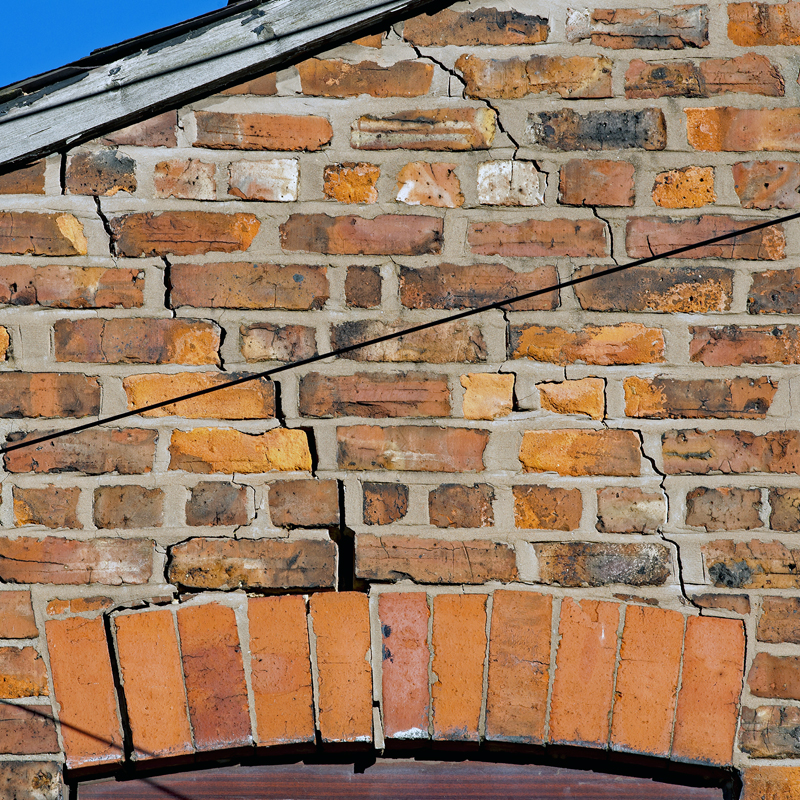
Diagonal cracks in the brickwork above windows and patio doors, sagging arches and dropped soldier courses are all indications that brick arch and soldier course lintels have failed and are struggling to carry the load. Older buildings will have had robust timber frames that fortuitously helped to support the brickwork. In many properties these frames have been replaced with uPVC, resulting in inadequate support contribution.
How does a reinforced brick beam lintel work?
When a pair of helical bars are bonded into two separate bed joints the composite chord of each set of bars, grout and the two brick courses either side of the bars form the upper and lower flanges of a masonry brick beam or lintel; much the same as the top and bottom flanges of an H-Beam. The brickwork between each chord represents the web of the beam. Provided there is sufficient deadweight at the end of the beam the lintel can be used to span openings up to 3.6m wide, carrying its own weight plus a safety-factored load of 2.6 tonne.

Cost effective brick repairs that match
Repairing and restoring damaged brickwork is more cost effective and less disruptive than replacing them. 1st Master Wall Ties offer a simply way of improving the appearance and integrity of damaged masonry surfaces using specialist mineral brick repair mortars, which replicate the properties and colour of the original masonry.
Part of our colour-matching service now extends to brick tinting, a method of dying bricks on new extension in order to match the older brickwork of the main structure. Combining coloured pigments with a vapour permeable fixing additive provides a permanent, colourfast stain that is resilient to weathering and UV exposure.
Areas of frost-damaged, weathered or mismatching brickwork can now be repaired quickly, durably and effectively with minimum disruption to the building.
