

Call our head office number today to book a survey 023 9243 0183, or book online
Remedial Wall Tie Replacement Services
Wall tie replacement is the process of installing new ties into cavity wall construction when the originals have failed. Over time, wall ties can corrode, weaken, or be found to have been installed incorrectly. Replacing them ensures the outer leaf of brickwork remains securely connected to the main structure, preserving stability and prevents further structural issues from occuring. If you’d like to know more about the history of Wall Ties in a cavity wall please click here.
Want to get an idea of the condition of your wall ties? Fill out this short questionnaire to learn more about their potential state. The team at South Coast Structural Repairs has developed a clever questionnaire that uses just 10 simple questions about your property to provide a score out of 25 — giving you an indication of your wall ties’ potential condition and offering guidance on what to do next. Why not give it a try !
Why is Wall Tie Replacement Required?
Wall tie replacement is often necessary to protect the structural stability of a property. There are two main reasons why ties may need replacing:
1. Wall Tie Failure
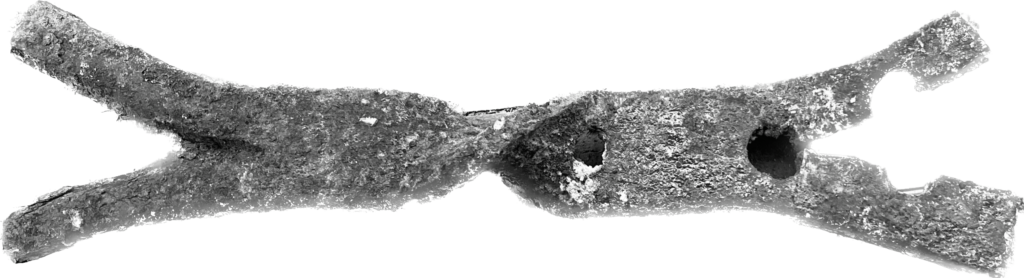
Cavity wall tie failure occurs when moisture and oxygen react with the metal, causing corrosion. This creates brittle iron oxide layers that weaken the steel ties, reducing their ability to hold the walls securely together.
2. Defective Design or Construction
Sometimes the issue stems from poor construction practices. Examples include wall ties with inadequate embedment depth, or too few ties being installed during the original build.



How to Spot Wall Tie Failure
Outwardly-visible signs of cavity wall tie failure depend on the building’s construction and the type of tie used. Key signs to look out for include:
1. Horizontal cracks along mortar joints – often caused by corroding steel plate ties.
2. Bowing or undulating walls – indicating the outer leaf is no longer securely tied to the structure.
3. Loose or bulging outer leaf – most visible on flank or gable walls.
As corrosion develops, bulky iron oxide layers expand, sometimes splitting walls and producing horizontal cracks along the mortar joints. In some cases, remedial wall tie replacement may be necessary to restore structural integrity.
Wire ties usually erode without obvious visual signs, so cavity wall tie inspections are important to detect potential failures before walls begin to bulge or buckle.
Wall areas most vulnerable to failure are long spans between corners, brick panels between windows, and triangular gable apex walls..

Wall Tie Condition Survey
A wall tie survey involves collecting and recording detailed information about the wall construction and the condition of cavity wall ties. The aim is to provide objective data on tie integrity rather than subjective opinions on longevity.
Ties are classified according to BRE Digest 401, which rates steel tie corrosion from 1 (uncorroded) to 9 (total failure). Based on these results, the survey report identifies appropriate remedial measures, which may range from monitoring over the next decade to immediate remedial wall tie replacement.
Stages of the Survey
1. Existing Wall Tie Spacing
-
A metal detector locates wall ties over the survey area.
-
Ensures the number of ties per square metre meets current building standards.
2. Visual Inspection of Sample Ties
-
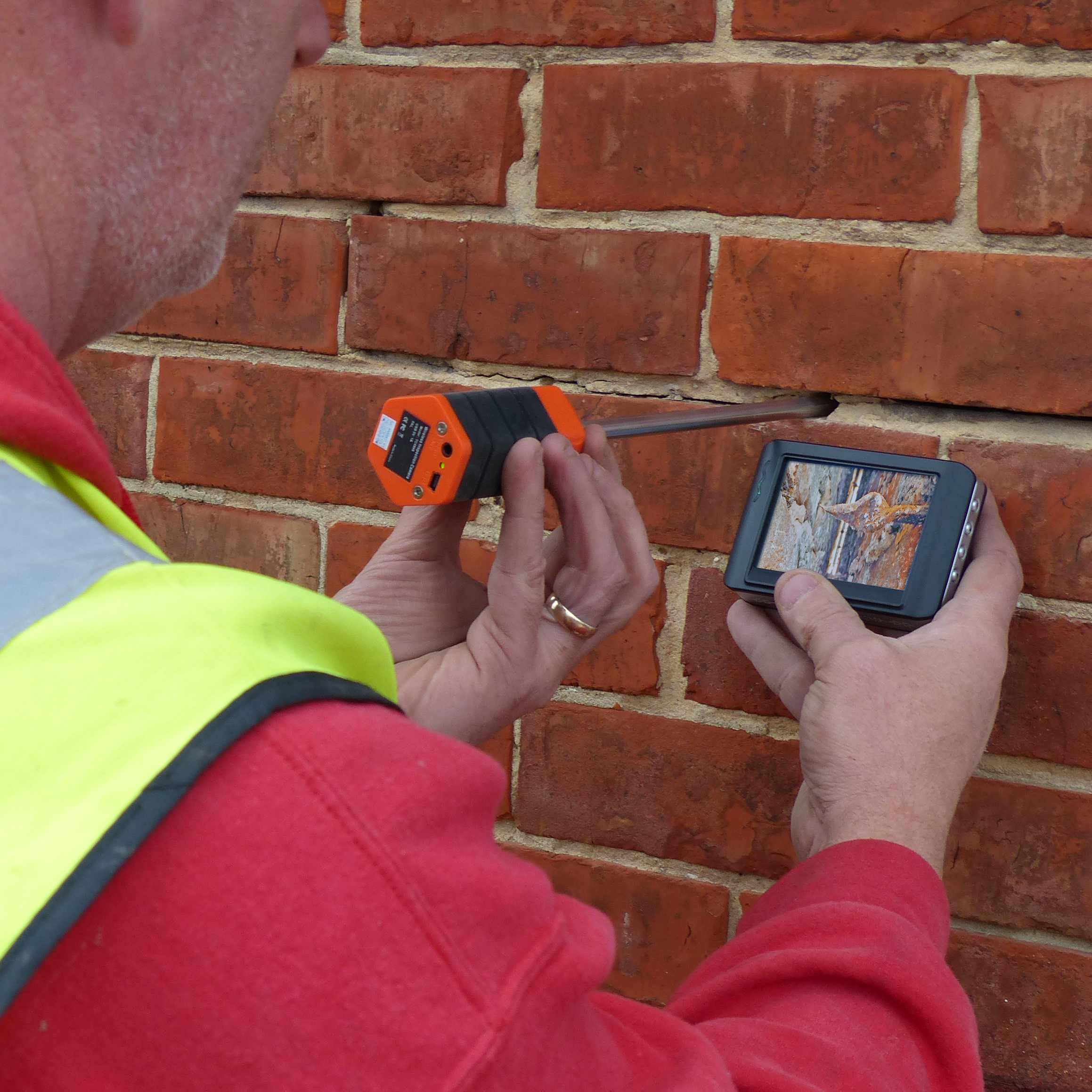
A borescope examines randomly selected ties inside the cavity (if unobstructed).
-
Mortar may be removed locally to inspect tie-ends, determine type, and measure embedment depth if cavity view is obstructed by insulation for example.
3. General Observations
-
Wall composition on both sides of the cavity (brick, perforated brick, concrete block, timber frame).
-
Cavity width and building height, exposure level, wind speed, and terrain (per Table 5 of BRE Digest 401).
-
Cracks or bulges in walls and their relation to tie positions.
-
Bowing, leaning, or undulation of surfaces.
-
Other defects affecting tie corrosion risk (bed joints, salt exposure, etc.).
A thorough cavity wall tie inspection ensures that any recommendations for remedial wall tie replacement are based on objective evidence, reducing risk and maintaining long-term structural integrity.

Installing Wall Ties in Existing Buildings
Replacing or installing wall ties in an existing structure requires careful planning and adherence to building standards. A successful installation ensures that the outer leaf of brickwork is securely connected to the main structure, maintaining stability and safety.
Preparation and Survey Requirements
Before installation, a wall tie condition survey or cavity wall tie inspection is carried out. This identifies corroded or defective ties, establishes their spacing, and determines which areas require intervention. Understanding the wall construction, cavity width, and exposure conditions helps guide the choice of replacement system.
Types of Remedial Wall Ties
Different tie systems are used depending on the building type and extent of corrosion:
-
Helical Ties – Twisted steel rods that are inserted into pre-drilled holes in the wall. Suitable for most cavity walls, they provide strong mechanical anchorage without expanding.
-
Resin Anchored Ties – Ties fixed in place with resin, ideal for areas where drilling into masonry is limited or where high corrosion resistance is required. Also very suitable for soft or crumbling masonry.
-
Mechanical Ties – Steel ties with fixings that grip both leaves of the wall, often used for heavy or highly exposed walls.
Each system has advantages depending on wall type, tie spacing, and exposure conditions.
Installation Procedure Overview
-
Locate and mark positions for replacement ties based on survey data.
-
Drill holes through the outer leaf into the cavity and, if necessary, through the inner leaf.
-
Insert ties according to manufacturer guidance, ensuring correct embedment depth and alignment.
-
Make good the brickwork after installation, including repointing around tie locations if required.
Key Considerations and Best Practices
-
Ensure ties are compatible with the wall type and do not introduce stress points.
-
Avoid over-drilling, which can weaken masonry.
-
Use stainless steel or corrosion-resistant ties for long-term durability.
-
Document all installations as part of the building’s maintenance record.
Proper installation of remedial wall ties is crucial for structural stability. By following survey recommendations and best practices, buildings can maintain safe and reliable connections between cavity walls and main structures.


Isolation and Removal of Failed Wall Ties
Isolating or removing corroded wall ties is a critical step in remedial wall tie replacement, as outlined in BRE Digest 329. This process ensures that existing ties do not compromise the structural integrity of the building or interfere with the installation of new ties.
Methods for Isolation or Removal
Depending on the condition of the existing wall ties, the following methods are recommended:
-
Isolation: If the existing ties are still structurally sound but corroding, they should be isolated to prevent further deterioration. This can be achieved by:
-
Encasing the ties in a corrosion-resistant sleeve.
-
Drilling and inserting a non-corrosive foam to limit and damage further expansion may cause.
-
-
Removal: If the ties are severely corroded or compromised, they should be removed entirely. This involves:
-
Removing an adjescent brick to allow space for removal
-
Extracting the ties carefully from inner leaf to avoid damaging the surrounding masonry.
-
Sealing the resulting holes with a suitable mortar mix to restore the wall’s integrity.
-
Cutting the ties flush with the inner leaf and sealing the exposed ends.
-
It’s essential to follow the guidelines provided in BRE Digest 329 to ensure that these procedures are carried out correctly and safely.
What are Helical Wall Ties?
Helical wall ties are work-hardened stainless steel wires that have been cold-rolled into a cruciform shape and twisted into a helix. They are designed to anchor the outer wall of a building to its inner structure and come in a range of lengths to suit different cavity widths.
How Do Helical Ties Work?
The helix-shaped stainless steel tie is inserted into a small pilot hole, creating a mechanical connection that grips both the inner and outer layers of a cavity wall.
-
As the tie is driven, it corkscrews into the bricks, with its work-hardened fins undercutting the masonry to provide an expansion-free anchorage.
-
This design allows the tie to withstand both tension and compression loads.
-
The continuous helix also creates multiple drip points, which help prevent water from passing across the tie, protecting the wall from moisture damage.

What Are Mechanical Wall Ties?
Mechanical wall ties are stainless steel threaded studs designed to provide a secure connection between cavity walls. Each tie features an expanding mechanism at both ends, typically consisting of a neoprene sleeve held in place by nuts and washers. These ties are available in a variety of sizes to accommodate the most common cavity wall widths, making them a versatile solution for masonry construction.
How Do Mechanical Expanding Ties Work?
To install a mechanical tie, a clearance hole is first drilled into the host masonry. The tie is then inserted, and torque is applied to the threaded torque nut. This action causes the nuts and washers at the far end of the stud to compress the neoprene sleeve, which expands radially to grip the inner-leaf masonry securely.
Once the factory-set torque level is reached, the torque nut continues along the bar to expand the neoprene sleeve at the near end of the stud, firmly engaging the outer wall. A small neoprene drip-ring positioned in the central portion of the bar helps prevent water penetration, ensuring a durable and weather-resistant connection.

What Are Resin-Fix Wall Ties?
Resin-fix wall ties are stainless steel pins designed to create a strong, durable bond with resin or cementitious brick adhesives. These ties are engineered to allow sufficient deformation, which helps them grip the resin effectively. Deformed ties can take various forms, including coarse-threaded studs, helically twisted bars, or even stainless steel rebars, depending on the application.
How Do Resin-Bonded Ties Work?
Installation begins by drilling a small hole through the outer leaf and approximately 70mm into the inner leaf. The holes are then carefully cleaned of all drill dust using compressed air to ensure maximum adhesion.
Resin is pumped into the hole within the inner leaf, and the tie is inserted. As the resin sets, it bonds securely to the deformed tie and the surrounding brickwork. Finally, resin is applied around the portion of the tie in the outer leaf to ensure a complete, weather-resistant bond.

Book an appointment
[forminator_form id=”1693″]